678-366-7933


 Store
Store


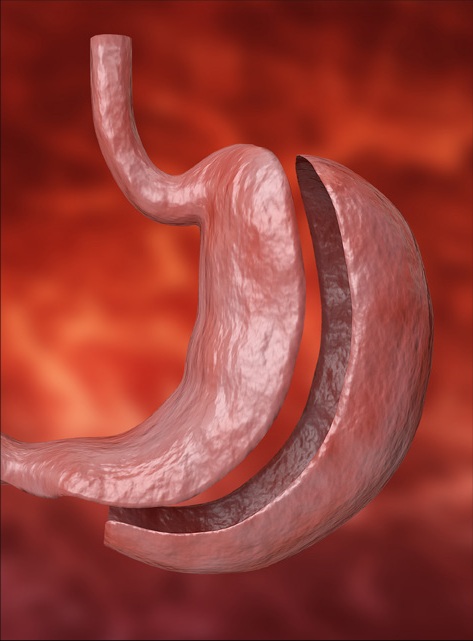
Urgent Care Management of the Patient With Prior Bariatric Surgery
What Urgent Care Clinicians Need to Know
Patients with prior bariatric surgery carry unique risks, including altered anatomy, rapid weight loss, nutritional deficiencies, and high postoperative complication rates. This issue provides a structured approach to evaluating the patient with a history of bariatric surgery who presents to urgent care, emphasizing that even seemingly benign presentations can represent emergent complications and that a high index of suspicion is essential.
The issue reviews the most commonly performed bariatric procedures in the United States and their characteristic complications, distinguishes early postoperative complications from those that occur months to years later, and covers history taking, physical examination, red-flag findings, laboratory and imaging considerations, treatment, and disposition — including which presentations warrant prompt emergency department transfer and consultation with a bariatric surgeon. Special populations, medical tourism, and the use of glucagon-like peptide-1 receptor agonists are also addressed.
Why This Topic Matters in Urgent Care
- Bariatric procedures have become increasingly common, and complication rates may be as high as 40%, so urgent care clinicians will encounter these patients.
- Patients may not volunteer a history of bariatric surgery; clinicians should ask about surgical history directly and treat new abdominal complaints in these patients as high risk until proven otherwise.
- The differential diagnosis is broad and time-dependent; understanding whether a complication is early or late narrows the diagnosis considerably.
- Physical examination findings can be more subtle than expected, and a benign abdominal examination does not rule out a surgical emergency.
- Common urgent care prescribing patterns can cause iatrogenic harm in this population, making awareness of bariatric history important even for unrelated complaints.
- Disposition decisions — outpatient management versus emergency department transfer — carry significant clinical and medicolegal weight, and documentation matters.
Clinical Content at a Glance
Clinical Q&A
- What are the most commonly performed bariatric procedures, and why does the type matter?
- A small number of procedures account for most bariatric surgeries performed in the United States, and they differ in whether they achieve weight loss through restriction, malabsorption, or both. Because each one alters anatomy in a characteristic way, the type of procedure predicts which complications are most likely — making it the first detail to establish. Revisional and reoperative procedures add another layer of complexity.
- How do early and late complications differ?
- Complications can arise immediately after surgery or years later, and timing narrows the differential considerably. Those occurring within the first 30 days tend to reflect the operation itself, while later presentations reflect the altered anatomy, rapid weight loss, and nutritional changes that follow it. Prevalence and typical presenting features for both are summarized in reference tables.
- What history and examination findings should raise concern?
- A thorough surgical history — including the type and timing of the procedure — anchors the evaluation, and patients may not volunteer that history unless asked directly. Specific red-flag vital sign and examination findings signal serious pathology, but localized tenderness and peritoneal signs are frequently absent, and body habitus can make the abdominal examination more challenging.
- What is the role of laboratory testing and imaging?
- Plain films have a low diagnostic yield and are generally insufficient for identifying postoperative complications, while advanced imaging is the preferred modality for detecting the most serious ones — testing many urgent care settings cannot provide. Lack of examination findings should not be fully reassuring, and negative studies do not exclude a major complication.
- Which patients can be managed in urgent care, and which require transfer?
- Unstable patients and those with a defined set of postoperative conditions require stabilization, prompt surgical consultation, and emergency department transfer, which should not be delayed for testing. Stable patients with mild symptoms and a reassuring workup may be candidates for outpatient treatment when close follow-up, tolerance of oral intake, and adequate home support are in place. Medication selection in this population carries risks of its own, and documentation should reflect the reasoning behind the disposition.
Case Snapshots
Case 1 — Nausea and Vomiting After Sleeve Gastrectomy:
A 32-year-old woman with normal vital signs presents with vomiting 2 months after gastric sleeve surgery and wonders whether she has a stomach bug. The issue works through whether her symptoms are related to her recent surgery.
Case 2 — Cramping and Bloating 2 Years After Gastric Bypass:
A 58-year-old woman with prior Roux-en-Y gastric bypass presents with generalized cramping abdominal pain, nausea, and bloating, and is afebrile but tachycardic. The issue explores whether this patient should be sent to the hospital for further evaluation.
Case 3 — Pleuritic Chest Pain After Recent Surgery Abroad:
A 43-year-old man presents with shortness of breath and pleuritic chest pain 2 weeks after laparoscopic Roux-en-Y gastric bypass performed in Mexico, following a prolonged flight home. The issue considers his risk factors and the best course of action.
Clinical Tools
- Reference table of early complications within 30 days of bariatric surgery, with prevalence and presenting features
- Reference table of late complications beyond 30 days of bariatric surgery
- Differential diagnosis table organized by common chief complaints, separating can’t-miss diagnoses from other diagnoses to consider
- Table of key history questions for patients with prior bariatric surgery and the clinical importance of each
- Table of red-flag physical examination findings by examination component
- Figures illustrating sleeve gastrectomy, Roux-en-Y gastric bypass, and adjustable gastric banding anatomy
- Clinical pathway for the urgent care management of the patient with prior bariatric surgery, with interactive version
- Five Things That Will Change Your Practice in Managing Patients With Prior Bariatric Surgery
- Time- and Cost-Effective Strategies
- Coding & Charting: What You Need to Know, plus a Coding Challenge
Risk Management Pitfalls
- Attributing tachycardia in a recently postoperative bariatric patient to pain, anxiety, or dehydration
- Assuming persistent vomiting is gastroenteritis rather than a serious postoperative complication
- Relying on the absence of peritoneal signs to exclude internal hernia after Roux-en-Y gastric bypass
- Prescribing nonsteroidal anti-inflammatory drugs without recognizing the marginal ulcer risk in these patients
- Failing to obtain a full surgical history
Key References
Following are the most informative references cited in this paper, as determined by the author.
13. * Eisenberg D, Shikora SA, Aarts E, et al. 2022 American Society for Metabolic and Bariatric Surgery (ASMBS) and International Federation for the Surgery of Obesity and Metabolic Disorders (IFSO): indications for metabolic and bariatric surgery. Surg Obes Relat Dis. 2022;18(12):1345. (Clinical practice guideline) DOI: https://doi.org/10.1016/j.soard.2022.08.013
15. * American Society for Metabolic and Bariatric Surgery. ASMBS endorsed procedures and FDA approved devices. Accessed July 15, 2026. https://asmbs.org/resources/endorsed-procedures-and-devices/ (Website)
21. * Clapp B, Ponce J, Corbett J, et al. American Society for Metabolic and Bariatric Surgery 2022 estimate of metabolic and bariatric procedures performed in the United States. Surg Obes Relat Dis. 2024;20(5):425. (Review) DOI: https://doi.org/10.1016/j.soard.2024.01.012
22. * Ogunniyi A. Emergency department management of patients with complications of bariatric surgery. Emerg Med Pract. 2019;21(7):1-28. https://www.ebmedicine.net/topics/gastro-intestinal/bariatric-surgery (Review)
37. * Burjonrappa S, Grover K. Bariatric surgery complications. StatPearls: NCBI Bookshelf. Treasure Island (FL): StatPearls Publishing. Updated February 8, 2025. Accessed July 15, 2026. https://www.ncbi.nlm.nih.gov/books/NBK615299/ (Review)
74. * De Simone B, Chouillard E, Ramos AC, et al. Operative management of acute abdomen after bariatric surgery in the emergency setting: the OBA guidelines. World J Emerg Surg. 2022;17(1):51. (Clinical practice guideline) DOI: https://doi.org/10.1186/s13017-022-00452-w
101. * Farooqi S, Montrief T, Koyfman A, et al. High risk and low incidence diseases: bariatric surgery complications. Am J Emerg Med. 2025;87:113-122. (Review) DOI: https://doi.org/10.1016/j.ajem.2024.10.050
CME Information
- 4 CME credits (available for subscribers)
- View complete CME Information here