678-366-7933


 Store


Evidence-Based Management of Kawasaki Disease in the Emergency Department
What ED Clinicians Need to Know
Kawasaki disease is the leading cause of acquired heart disease in children in the United States. The issue reports >5000 hospitalizations in the United States in 2019 and emphasizes that this childhood vasculitis can resemble common febrile illnesses. ED management and critical decision-making are especially challenging when presentations are incomplete or occur outside the typical age range.
This issue reviews common pitfalls in recognition, the role of laboratory and cardiac assessment, and treatment considerations, while addressing overlap with multisystem inflammatory syndrome in children and other illnesses. Emerging research on machine-learning diagnostic tools and alternative therapies reflects ongoing efforts to improve recognition and care.
Why This Topic Matters in the ED
- Overlap with common childhood illnesses can make Kawasaki disease difficult to recognize.
- Incomplete and evolving presentations create diagnostic challenges, particularly in young infants and older children.
- Coronary complications and shock make timely recognition a high-stakes concern.
- A history of Kawasaki disease may remain relevant to later emergency presentations because cardiac risks can persist.
Clinical Content at a Glance
Clinical Q&A
- Why is Kawasaki disease difficult to diagnose?
- The presentation of Kawasaki disease can be similar to other childhood illnesses, and clinical findings may evolve over time. The issue explores the diagnostic challenges of both complete and incomplete forms of the disease.
- How does incomplete Kawasaki disease differ from a typical presentation?
- Incomplete disease has fewer of the characteristic clinical features and can be especially difficult to recognize. The issue reviews how clinical history and supporting findings contribute to assessment.
- What other conditions can resemble Kawasaki disease?
- Infectious illnesses and inflammatory conditions can share features with Kawasaki disease. The issue compares these overlapping presentations and their clinical significance.
- What aspects of treatment does the issue discuss?
- The issue addresses initial therapy, coronary risk, and treatment resistance. It also discusses adjunctive treatments and emerging therapeutic research.
- Why do cardiac complications remain important after the acute illness?
- Coronary involvement can have lasting consequences, including later ischemic complications. The issue reviews long-term prognosis and the relevance of prior Kawasaki disease to emergency care.
Case Snapshots
CASE 1 — Fever and Evolving Mucocutaneous Findings: A 3-year-old girl previously diagnosed with a viral illness returns with continued fever, an expanding rash, red eyes, fissured lips, and hand swelling. The case highlights the challenge of recognizing Kawasaki disease as a febrile illness evolves.
CASE 2 — An Infant With Fever and Rash: A 4-month-old boy presents with persistent fever, a diffuse rash, and swollen red hands and feet; earlier eye redness has resolved. The case illustrates the uncertainty created by an incomplete or sequential presentation in a young infant and the potential consequences of delayed recognition.
CASE 3 — Persistent Fever With Reassuring Laboratory Results: A 2-year-old boy has continued fever, unilateral cervical lymphadenopathy, and a fine rash, with unremarkable initial blood work. The case explores diagnostic uncertainty and the importance of reassessment and follow-up when the clinical picture remains unresolved.
Clinical Tools
- A summary of conditions associated with prolonged fever in children.
- A comparison of Kawasaki disease and similarly presenting illnesses, including their clinical features, treatment approaches, and complications.
- A clinical-feature reference covering characteristic findings, their timing, and their frequency.
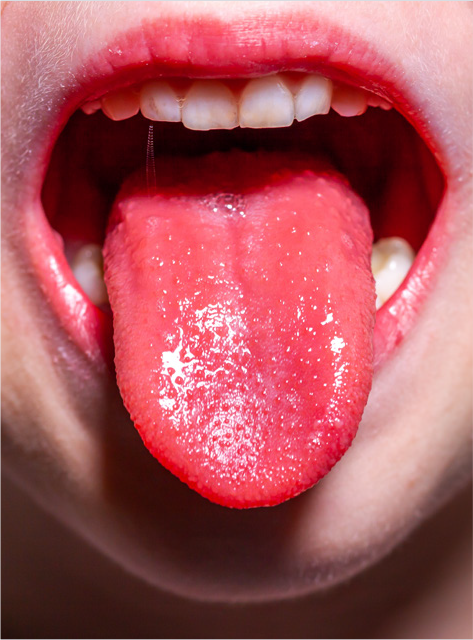
- Clinical photographs illustrating ocular, oral, skin, and extremity findings associated with Kawasaki disease.
- A clinical pathway for evaluation and management of pediatric patients with suspected complete or incomplete Kawasaki disease in the ED.
Risk Management Pitfalls
- Attributing prolonged fever to a routine viral illness.
- Dismissing an incomplete or evolving clinical presentation.
- Overlooking cardiac complications after Kawasaki disease.
- Delaying treatment while awaiting echocardiography.
- Using a normal initial echocardiogram to exclude Kawasaki disease.
Key References
Following are the most informative references cited in this paper, as determined by the authors.
- * Kawasaki T. [Acute febrile mucocutaneous syndrome with lymphoid involvement with specific desquamation of the fingers and toes in children]. Arerugi. 1967;16(3):178-222. (Retrospective review; 50 patients)
- * Jone PN, Tremoulet A, Choueiter N, et al. Update on diagnosis and management of Kawasaki disease: a scientific statement from the American Heart Association. Circulation. 2024;150(23):e481-e500. (Scientific statement) DOI: 10.1161/CIR.0000000000001295
- * Newburger JW, Takahashi M, Gerber MA, et al. Diagnosis, treatment, and long-term management of Kawasaki disease: a statement for health professionals from the Committee on Rheumatic Fever, Endocarditis, and Kawasaki Disease, Council on Cardiovascular Disease in the Young, American Heart Association. Pediatrics. 2004;114(6):1708-1733. (Consensus statement) DOI: 10.1542/peds.2004-2182
- * Noval Rivas M, Arditi M. Kawasaki disease and multisystem inflammatory syndrome in children: common inflammatory pathways of two distinct diseases. Rheum Dis Clin North Am. 2023;49(3):647-659. (Review) DOI: 10.1016/j.rdc.2023.03.002
- * Kanegaye JT, Wilder MS, Molkara D, et al. Recognition of a Kawasaki disease shock syndrome. Pediatrics. 2009;123(5):e783-e789. (Prospective cohort study; 187 patients) DOI: 10.1542/peds.2008-1871
- * Tremoulet AH, Jain S, Chandrasekar D, et al. Evolution of laboratory values in patients with Kawasaki disease. Pediatr Infect Dis J. 2011;30(12):1022-1026. (Retrospective cohort study; 380 patients) DOI: 10.1097/INF.0b013e31822d4f56
- * Son MBF, Gauvreau K, Kim S, et al. Predicting coronary artery aneurysms in Kawasaki disease at a North American center: an assessment of baseline z scores. J Am Heart Assoc. 2017;6(6):e005378. (Retrospective cohort study; 261 patients) DOI: 10.1161/JAHA.116.005378
- * Miyata K, Miura M, Kaneko T, et al. Risk factors of coronary artery abnormalities and resistance to intravenous immunoglobulin plus corticosteroid therapy in severe Kawasaki disease: an analysis of Post RAISE. Circ Cardiovasc Qual Outcomes. 2021;14(2):e007191. (Multicenter prospective cohort study; 2648 patients) DOI: 10.1161/CIRCOUTCOMES.120.007191
- * Belay ED, Maddox RA, Holman RC, et al. Kawasaki syndrome and risk factors for coronary artery abnormalities: United States, 1994-2003. Pediatr Infect Dis J. 2006;25(3):245-249. (Epidemiologic study; 3115 patients) DOI: 10.1097/01.inf.0000202068.30956.16