
|
|


Sentinel injuries are often found incidentally on infants presenting with medical concerns or minor trauma as the chief complaint. Failure to recognize these findings as a potential indicator of child physical abuse may result in devastating outcomes including disability and death. This issue reviews the most common sentinel injuries including bruises, subconjunctival hemorrhages, oral injuries, and burns. Evidenced-based strategies are provided for evaluation and management of infants presenting to the emergency department with sentinel injuries.

How would you manage these patients? Subscribe for evidence-based best practices and to discover the outcomes.
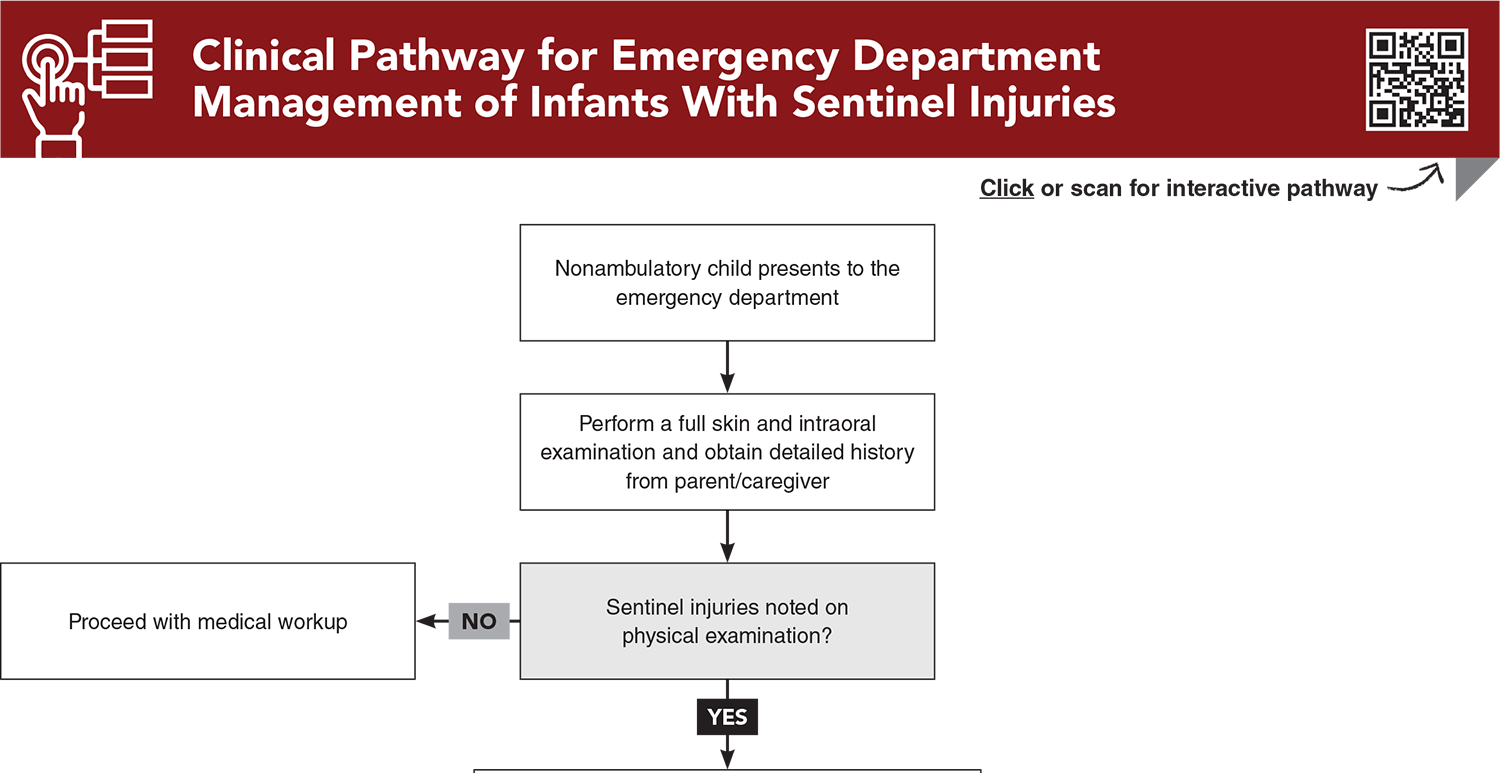
Subscribe to access the complete Clinical Pathway to guide your clinical decision making.
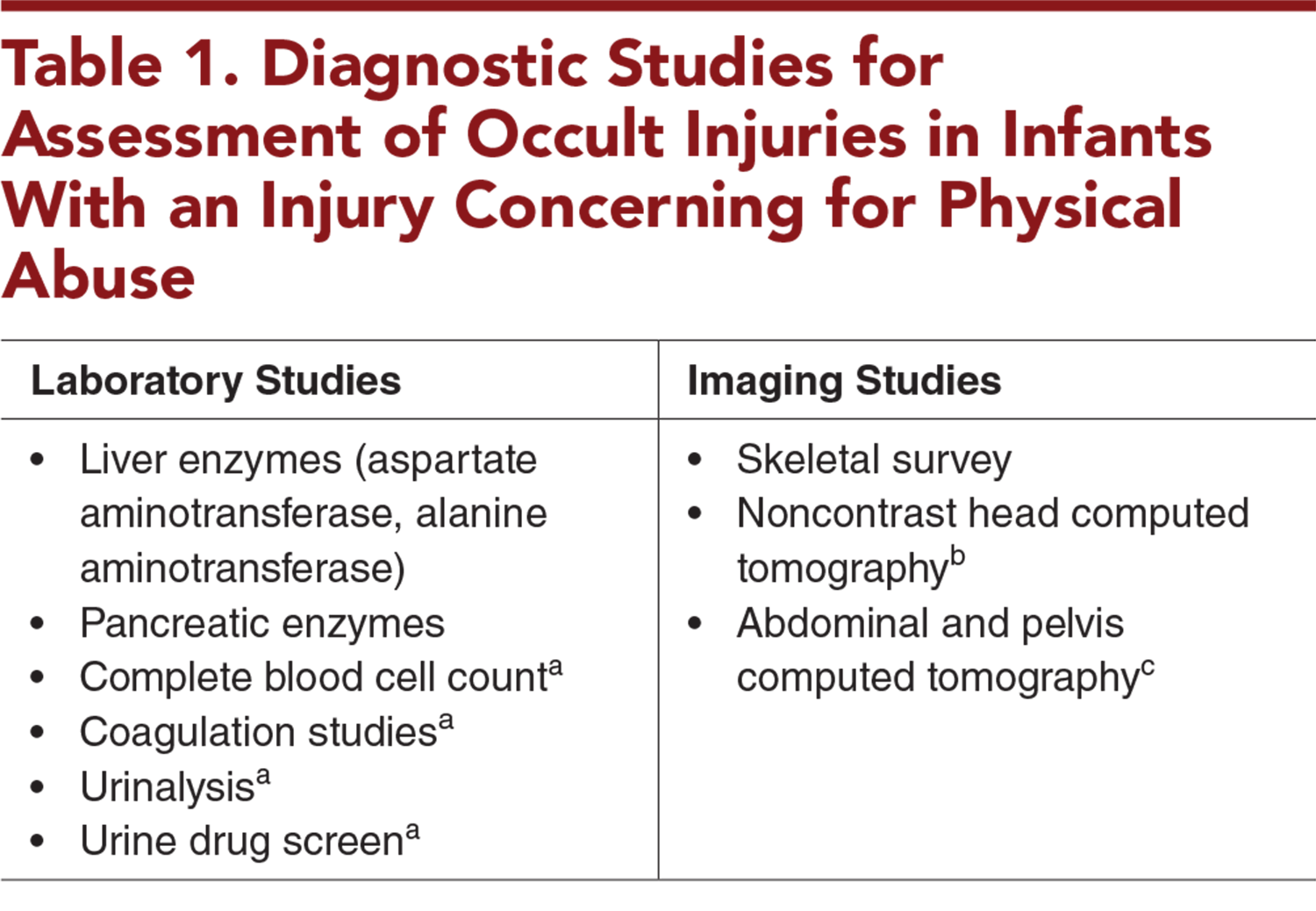
Subscribe for full access to all Tables and Figures.
Buy this issue and
Following are the most informative references cited in this paper, as determined by the authors.
2. * Sheets LK, Leach ME, Koszewski IJ, et al. Sentinel injuries in infants evaluated for child physical abuse. Pediatrics. 2013;131(4):701-707. (Retrospective case-control; 200 patients) DOI: 10.1542/peds.2012-2780
10. * Sugar NF, Taylor JA, Feldman KW. Bruises in infants and toddlers: those who don’t cruise rarely bruise. Puget Sound Pediatric Research Network. Arch Pediatr Adolesc Med. 1999;153(4):399-403. (Cross-sectional survey; 973 patients) DOI: 10.1001/archpedi.153.4.399
31. * Anderst JD, Carpenter SL, Abshire TC, et al. Evaluation for bleeding disorders in suspected child abuse. Pediatrics. 2013;131(4):e1314-e1322. (AAP clinical report) DOI: 10.1542/peds.2013-0195
82. * Kleinman PK, Nimkin K, Spevak MR, et al. Follow-up skeletal surveys in suspected child abuse. AJR Am J Roentgenol. 1996;167(4):893-896. (Prospective diagnostic; 181 patients) DOI: 10.2214/ajr.167.4.8819377
Subscribe to get the full list of 85 references and see how the authors distilled all of the evidence into a concise, clinically relevant, practical resource.
Keywords: infants, sentinel injury, sentinel injuries, child physical abuse, nonaccidental trauma, bruise, bruises, bruising, TEN-4-FACESp, subconjunctival hemorrhage, subconjunctival hemorrhages, oral injury, oral injuries, frenulum, frenulum tear, torn frenulum, burn, burns, scald burn, immersion burn, contact burn, occult injury, occult injuries, incidental injury, incidental injuries, documentation, reporting, nonambulatory
Taylor Dantuma, DO; Melissa Siccama, MD; Amy Young, MD
May 1, 2026
May 1, 2029 CME Information
4 AMA PRA Category 1 Credits™, 4 ACEP Category I Credits, 4 AAP Prescribed Credits, 4 AOA Category 2-B Credits. Specialty CME Credits: Included as part of the 4 credits, this CME activity is eligible for 4 Trauma CME credits and 4 Child Abuse CME credits, subject to your state and institutional approval.
Pediatric Emergency Medicine Practice • CONTINUE READING
Read this issue today — or unlock the entire library for a little more.

Stay current with a new Pediatric Emergency Medicine Practice issue every month, plus unlimited access to our complete issue library, all Interactive Clinical Pathways, and up to 190 CME credits.
Accredited By


Our Partners







 678-366-7933


 Store
Store