678-366-7933


 Store
Store


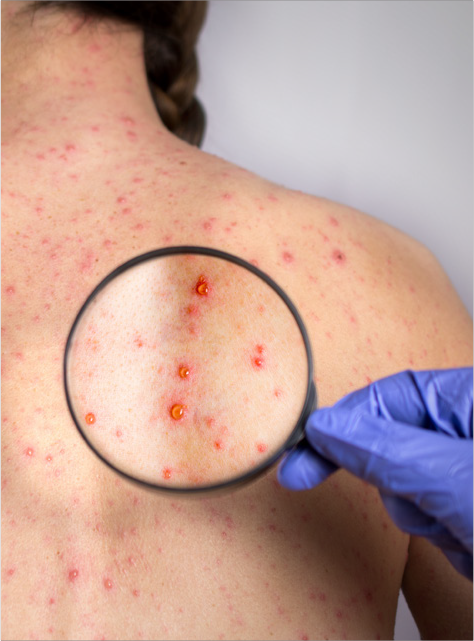
Drug-Induced Skin Reactions in Urgent Care
What Urgent Care Clinicians Need to Know
Drug exanthems encompass a wide spectrum from benign, self-limited morbilliform rashes to life-threatening severe cutaneous adverse reactions (SCARs). Because early presentations of SCARs can closely mimic benign drug rashes, failure to recognize warning signs can delay definitive care and worsen outcomes. This issue provides a practical framework for evaluating and managing patients with drug-induced skin reactions, with a focus on exanthematous drug reactions, drug-induced hypersensitivity syndrome (DIHS), and Stevens-Johnson syndrome/toxic epidermal necrolysis (SJS/TEN).
Successful urgent care management depends on a few critical steps: obtaining a complete medication history extending at least 2 months back, identifying “red flag” features that distinguish SCARs from benign reactions, and making timely disposition decisions The issue also highlights common pitfalls that can delay diagnosis and worsen outcomes.
Why This Topic Matters in Urgent Care
- Drug exanthems are among the most common medication-related presentations in urgent care; most are benign but a small subset are life-threatening and require immediate action.
- SCARs such as DIHS and SJS/TEN can look just like a common drug rash early on, making recognition of warning signs a critical skill.
- Identifying and stopping the offending drug is the single most important intervention, and getting the medication history right is key.
- Timely disposition, including outpatient care for benign reactions, and ED transfer for suspected SJS/TEN, can directly affect patient outcomes.
Clinical Content at a Glance
Clinical Q&A
- What distinguishes a benign drug reaction from a SCAR?
- Most drug rashes are benign morbilliform eruptions that resolve with drug discontinuation. SCARs share the same early appearance but are distinguished by warning signs such as mucosal involvement, skin pain, blistering, facial edema, fever, and lymphadenopathy.
- What is DIHS, and why does it matter?
- DIHS is a serious drug reaction involving internal organ involvement in addition to a widespread rash. It can be mistaken for a simple drug eruption, but features like facial edema and systemic symptoms are clues that something more serious is underway.
- If SJS/TEN is suspected, what should happen next?
- SJS/TEN is a rare but potentially fatal condition characterized by mucosal erosions, skin pain, and blistering. When it is suspected, the priority is immediate ED transfer, not additional workup in the urgent care setting.
- How is treatment of drug exanthems tailored to the reaction type?
- Treatment ranges from stopping the culprit drug and applying topical therapy for benign reactions to specialist-guided systemic therapy for DIHS and inpatient burn care for SJS/TEN. Systemic corticosteroids are not routinely needed and should not be reflexively prescribed.
Case Snapshots
Case 1 — Pediatric Exanthematous Drug Reaction
A 9-year-old boy develops an itchy, widespread rash after completing a course of amoxicillin. The issue illustrates how to confirm an exanthematous drug reaction, counsel the patient, and manage symptoms in the outpatient setting.
Case 2 — SJS Triggered by Sulfonamide Antibiotic
A 52-year-old woman presents with fever, painful blistering, and mucosal erosions weeks after completing an antibiotic course. The issue follows recognition of red-flag features, prompt ED transfer, and eventual burn center admission.
Case 3 — DIHS in an Adolescent on a New Antiseizure Medication
A 14-year-old girl on a recently added antiseizure medication presents with a diffuse rash, fever, and swelling. The issue illustrates recognition of DIHS, severity assessment using RegiSCAR criteria, and disposition to the ED.
Clinical Tools
- Clinical pathway for identification and treatment of drug-induced skin reactions in urgent care
- Differential diagnosis table for drug exanthems and selected mimics
- Clinical images of characteristic findings in exanthematous drug reactions, DIHS, and SJS/TEN
- Severity classification for DIHS
- RegiSCAR scoring tool reference for DIHS probability estimation
- Nikolsky sign technique and interpretation
- Treatment recommendations summary
- Coding and charting guidance for drug-induced skin reactions in urgent care
Risk Management Pitfalls
- Attributing fever and rash to infection without taking a full medication history
- Discharging a patient with suspected SJS/TEN with an outpatient dermatology referral instead of transferring immediately to the ED
- Limiting the medication history to the past week and missing a culprit drug with a delayed onset
- Sending a patient home without laboratory workup when DIHS is suspected, even when symptoms seem mild
- Prescribing systemic corticosteroids for DIHS without a plan for a prolonged taper or specialist follow-up
Key References
Following are the most informative references cited in this paper, as determined by the authors.
3.* Wei BM, Fox LP, Kaffenberger BH, et al. Drug-induced hypersensitivity syndrome/drug reaction with eosinophilia and systemic symptoms. Part I. Epidemiology, pathogenesis, clinicopathological features, and prognosis. J Am Acad Dermatol. 2024;90(5):885-908. (Review) DOI: 10.1016/j.jaad.2023.02.072
5.* Hama N, Abe R, Gibson A, et al. Drug-induced hypersensitivity syndrome (DIHS)/drug reaction with eosinophilia and systemic symptoms (DRESS): clinical features and pathogenesis. J Allergy Clin Immunol Pract. 2022;10(5):1155-1167. (Review) DOI: 10.1016/j.jaip.2022.02.004
7.* Shah H, Parisi R, Mukherjee E, et al. Update on Stevens-Johnson syndrome and toxic epidermal necrolysis: diagnosis and management. Am J Clin Dermatol. 2024;25(6):891-908. (Review) DOI: 10.1007/s40257-024-00889-6
18.* Kardaun SH, Sekula P, Valeyrie-Allanore L, et al. Drug reaction with eosinophilia and systemic symptoms (DRESS): an original multisystem adverse drug reaction. Results from the prospective RegiSCAR study. Br J Dermatol. 2013;169(5):1071-1080. (Prospective observational study; 201 patients) DOI: 10.1111/bjd.12501
31.* Dodiuk-Gad RP, Chung WH, Valeyrie-Allanore L, et al. Stevens-Johnson syndrome and toxic epidermal necrolysis: an update. Am J Clin Dermatol. 2015;16(6):475-493. (Review) DOI: 10.1007/s40257-015-0158-0
CME Information
- 4 CME credits (available for subscribers)
- Includes Pharmacology
- View complete CME Information here