678-366-7933


 Store
Store


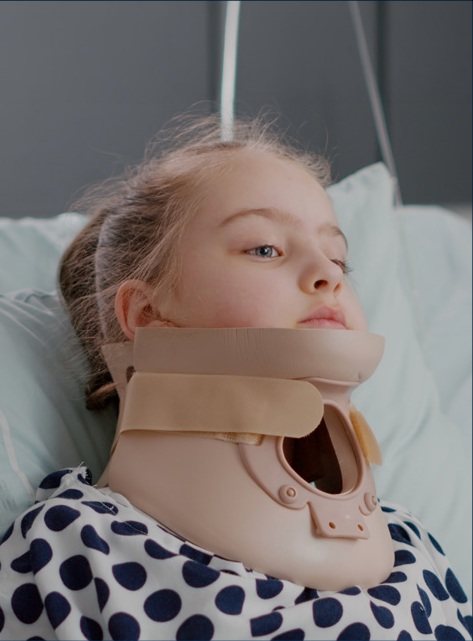
Pediatric Cervical Spine Injury: Emergency Department Management
What Pediatric Emergency Clinicians Need to Know About Pediatric Cervical Spine Injury
Pediatric cervical spine injury is rare but potentially catastrophic. Because anatomical differences between young children and adolescents drive both injury patterns and clearance strategies, a one-size-fits-all approach can lead to missed injuries or unnecessary imaging. This supplement walks clinicians through the evidence for prehospital immobilization, age-stratified clearance tools, imaging selection, and initial ED management — including the newly published PECARN Cervical Spine Injury Prediction Tool.
Why This Topic Matters
Pediatric cervical spine injuries carry mortality rates of up to 28% and significant long-term morbidity. Clinicians face competing pressures: avoiding missed injuries in a high-stakes population while limiting radiation exposure and unnecessary imaging. Recent evidence, including the 2024 PECARN rule, is reshaping how emergency departments approach clearance decisions for children of all ages. Staying current on this topic has direct implications for patient safety and medicolegal risk.
Clinical Content at a Glance
Clinical Q&A
- What anatomical features place pediatric patients at higher risk for cervical spine injury than adults?
- Children have larger head-to-body ratios, weak neck muscles, ligamentous laxity, and horizontally angulated facet joints. These differences shift the fulcrum of motion to C2-C3 in young children, predisposing them to upper cervical spine injuries and SCIWORA.
- When can children be safely cleared without imaging?
- Clinical clearance is possible in children who meet low-risk criteria — no focal neurologic findings, no midline tenderness, no distracting injury, and no high-risk mechanism or predisposing condition. Validated tools including NEXUS, the Canadian C-Spine Rule, and the PECARN Cervical Spine Injury Prediction Tool can guide this decision, with important caveats for children under 8 years.
- Which imaging modality should be used first?
- Plain film radiography remains the initial modality of choice for most children. CT is reserved for patients with low GCS score, high injury severity, or suspected atlanto-occipital dislocation. MRI is the study of choice for suspected SCIWORA, ligamentous injury, or when the spine cannot be cleared despite normal plain films and CT.
- How is neurogenic shock managed in the ED?
- Neurogenic shock is treated with isotonic crystalloid fluids up to 40 mL/kg, followed by vasopressors with both alpha- and beta-adrenergic activity if hypotension persists. A minimum systolic blood pressure target of 70 mm Hg + (2 × age in years) is recommended to maintain spinal cord perfusion.
Case Snapshots
Case 1: A 3-year-old girl with midline C2 tenderness after a high-speed MVC is evaluated for possible cervical spine injury. Clinicians must weigh imaging need against the child’s developmental stage and low-risk criteria.
Case 2: A 10-year-old hockey player with transient neurologic symptoms after a checked hit has a normal cervical series. The case raises the question of SCIWORA and whether validated clearance rules apply to older children.
Case 3: A 16-year-old ejected from a pickup truck presents with hypotension, bradycardia, and no limb movement. Neurogenic shock management and urgent surgical consultation are prioritized.
Key References
4. * Leonard JC, Kuppermann N, Olsen C, et al. Factors associated with cervical spine injury in children after blunt trauma. Ann Emerg Med. 2011;58(2):145-155. (Retrospective case-control study; 1600 patients) DOI: 10.1016/j.annemergmed.2010.08.038
9. * Rozzelle CJ, Aarabi B, Dhall SS, et al. Management of pediatric cervical spine and spinal cord injuries. Neurosurgery. 2013;72 Suppl 2:205-226. (Review) DOI: 10.1227/NEU.0b013e318276983b
45. * Stiell IG, Wells GA, Vandemheen KL, et al. The Canadian C-spine rule for radiography in alert and stable trauma patients. JAMA. 2001;286(15):1841-1848. (Prospective cohort study; 8924 patients) DOI: 10.1001/jama.286.15.1841
48. * Ehrlich PF, Wee C, Drongowski R, et al. Canadian C-spine Rule and the National Emergency X-Radiography Utilization Low-Risk Criteria for C-spine radiography in young trauma patients. J Pediatr Surg. 2009;44(5):987-991. (Retrospective case-matched cohort study; 375 patients) DOI: 10.1016/j.jpedsurg.2009.01.028
53. * Leonard JC, Harding M, Cook LJ, et al. PECARN prediction rule for cervical spine imaging of children presenting to the emergency department with blunt trauma: a multicentre prospective observational study. Lancet Child Adolesc Health. 2024;8(7):482-490. (Prospective observational cohort study; 22,430 patients) DOI: 10.1016/S2352-4642(24)00073-2
63. * Nigrovic LE, Rogers AJ, Adelgais KM, et al. Utility of plain radiographs in detecting traumatic injuries of the cervical spine in children. Pediatr Emerg Care. 2012;28(5):426-432. (Retrospective cohort study; 206 patients) DOI: 10.1097/PEC.0b013e3182535419
70. * Pang D, Nemzek WR, Zovickian J. Atlanto-occipital dislocation—part 2: The clinical use of (occipital) condyle-C1 interval, comparison with other diagnostic methods, and the manifestation, management, and outcome of atlanto-occipital dislocation in children. Neurosurgery. 2007;61(5):995-1015. (Prospective cohort study; 16 patients) DOI: 10.1227/01.neu.0000303191.98978.ea
CME Information
- 4 CME credits (available for subscribers)
- Includes Trauma
- View complete CME Information here