678-366-7933


 Store
Store
Increase confidence in closure method selection
Equip clinicians to compare ideal use, speed, cosmesis, strength, pain, cost, and clinical pearls across five routine closure options.
Give your clinicians an evidence-based, systematic approach that supports faster decisions and more consistent, high-quality care.
Concise, high-yield reference Easy to share with your team Adapted from The Laceration Course
Concise, high-yield reference
Easy to share with your team
Adapted from The Laceration Course
Built for urgent care teams
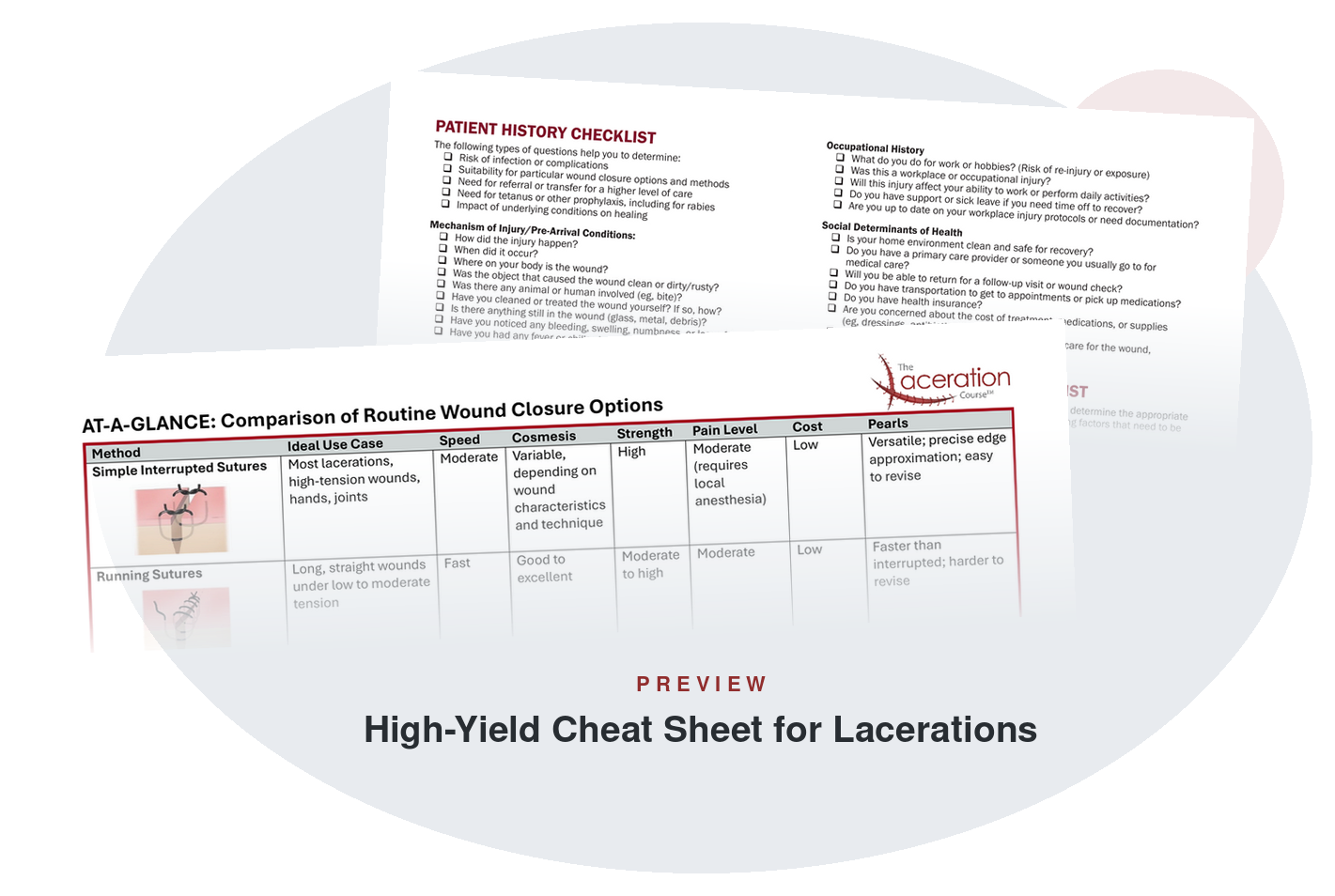
This two-page clinical reference helps your team compare routine wound closure options, ask questions that can change the patient care plan, and complete a more thorough examination.
Equip clinicians to compare ideal use, speed, cosmesis, strength, pain, cost, and clinical pearls across five routine closure options.
Ensure clinicians ask the questions that identify infection and complication risks, prophylaxis needs, healing concerns, referral considerations, and follow-up barriers.
Prompt clinicians to assess wound characteristics, contamination, neurovascular function, range of motion, and possible foreign bodies before repair.
Free clinical download
Complete this short form to receive the High-Yield Cheat Sheet for Lacerations, then forward it to clinicians across your organization. Use it during onboarding, clinical refreshers, or team discussion.
Built by an expert in laceration repair
Emergency Medicine and Urgent Care Physician
Course Director, The Laceration Course and The Abscess Course
Help your clinicians make faster, more confident decisions and deliver consistent, high-quality laceration care.
Accredited By


Our Partners