Head Trauma Essentials
Click to check your cart0
Your Current Course Progress:
0 %

Online CME course for emergency medicine clinicians

Trauma Essentials:Head Trauma

Who needs a CT? Who needs neurosurgery? When should you suspect abuse?

Review imaging, treatment, and disposition decisions in mild traumatic brain injury, initial management of severe TBI in adults and children, and evaluation of suspected abusive head trauma. Four case-based modules connect the evidence to patient presentations, with clinical checks, final case challenges, and practical references to reinforce your learning.

16 Trauma CME credits*10 patient cases

*Trauma credits are subject to state and institutional approval.

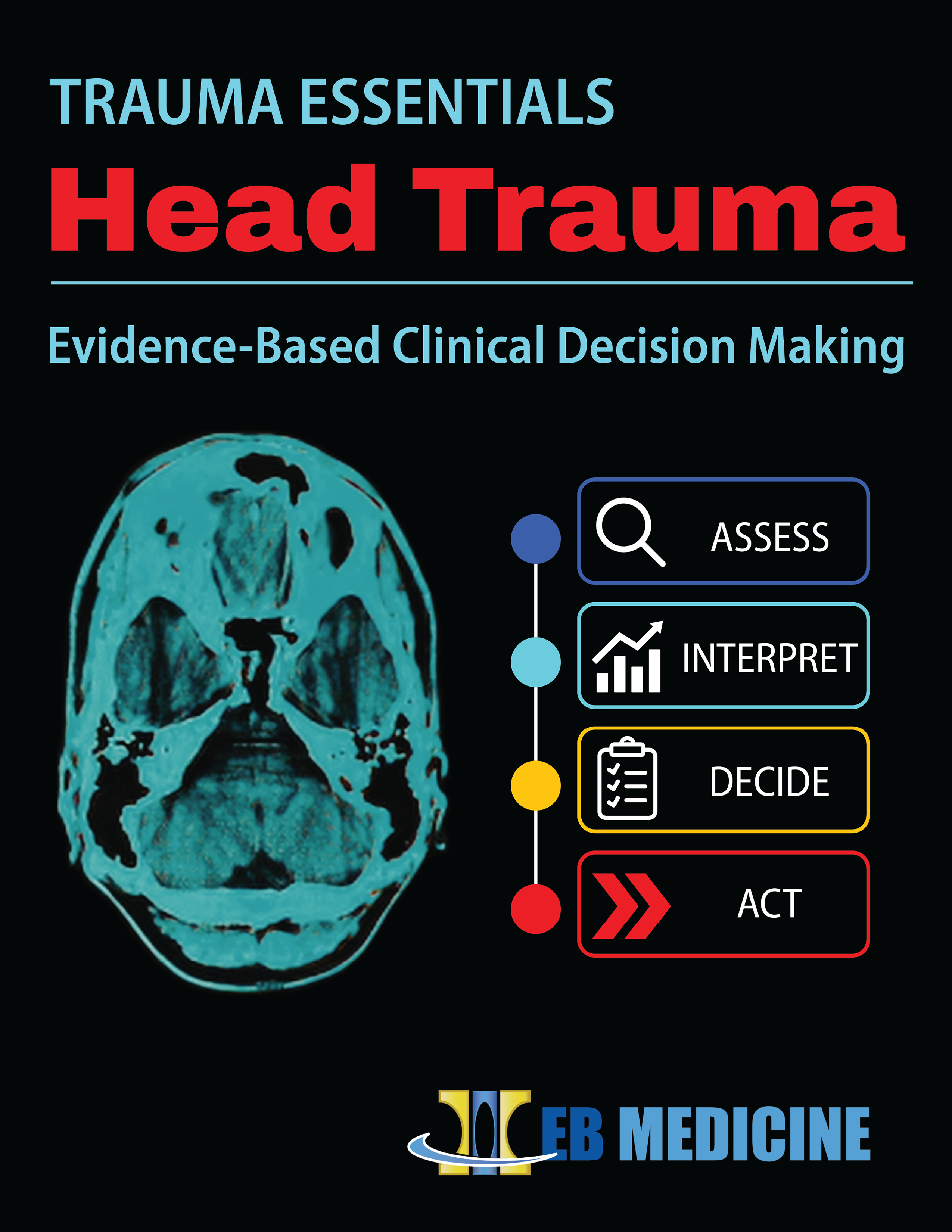
Trauma Essentials: Head Trauma course cover
4Focused modules
16CME credits
OnlineCase-based learning
$349Individual enrollment

Across ages and injury severity

From subtle signs of abuse to severe brain injury.

An infant with findings concerning for abuse. A patient with mild TBI who needs risk stratification. An adult or child with severe injury who needs immediate stabilization. Each presentation demands a different assessment and management approach.

Trauma Essentials: Head Trauma brings these presentations into one course, covering the evidence behind evaluation and management across ages and injury severity.

The clinical questions

Different patients. Different risks. Decisions across the spectrum of head trauma.

Review risk stratification, imaging, treatment, and disposition in mild TBI; initial evaluation and resuscitation in severe adult and pediatric injury; and recognition and evaluation of suspected abusive head trauma.

Across the four modules, examine age-specific considerations, prevention of secondary brain injury, neurosurgical consultation, management of elevated intracranial pressure, and indications for advanced therapies—alongside discharge guidance, documentation, reporting, and safe disposition.
The course approach

Connect the evidence to the patient in front of you.

Choose one of several case presentations at the beginning of each module, then follow that patient as you review the clinical evidence.

Complete a clinical check and a final case challenge with the case conclusion. Return to the beginning to follow a different patient if you choose.

What you’ll take into practice

Strengthen risk assessment, treatment priorities, and disposition decisions.

Refine your approach to mild TBI.

Review risk stratification, indications for imaging, and management of small intracranial injuries, with attention to age, anticoagulant or antiplatelet use, discharge precautions, and follow-up.

Prioritize early management of severe injury.

Review adult and pediatric stabilization, oxygenation, perfusion, and recognition of neurologic deterioration, including when to involve neurosurgery and treat elevated intracranial pressure.

Recognize findings that warrant an abuse evaluation.

Assess concerning histories and injury patterns, review diagnostic studies and specialty consultation, and address documentation, reporting, and safe disposition.

Clinical reasoning, applied

Choose a patient. Check your reasoning. Review the conclusion.

Every module pairs its clinical content with case studies, giving your learning a specific patient context.

  • Select your case. Choose one of two or three patient presentations at the start of each module.
  • Complete a clinical check. Check your understanding of the clinical guidance by applying it to your selected patient case.
  • Finish the case challenge. Answer three questions and review the case conclusion. Return to follow another case if you choose.

Build your expertise across the spectrum of head trauma

Explore the Course Modules

01Mild Traumatic Brain Injury4 Trauma CME credits*

Nearly 2.9 million people in the United States seek care for head trauma each year. The module reviews clinical decision guidelines for risk-stratifying patients with mild traumatic brain injury and the indications for CT. It addresses patients at the extremes of age, including infants and young children and older adults taking anticoagulant or antiplatelet agents. It also covers management and disposition of patients with small intracranial injuries (neurosurgery consultation, admission for observation, repeat imaging), short- and long-term sequelae, and discharge precautions and follow-up.

02Severe Traumatic Brain Injury in Adults4 Trauma CME credits*

Traumatic brain injury is a significant cause of long-term disability and death worldwide. The module emphasizes early recognition, optimization of oxygenation and perfusion, and appropriate disposition. It covers a systematic history and physical examination to identify life-threatening injuries, neuroimaging findings that warrant emergent neurosurgical consultation or intervention, management of elevated intracranial pressure, and indications for invasive monitoring and advanced therapies. It also highlights ongoing controversies and areas for future research.

03Severe Traumatic Brain Injury in Children4 Trauma CME credits*

More than 1.7 million traumatic brain injuries occur in the United States each year, about 30% of them in children aged <14 years. Early management focuses on preventing secondary injury, particularly by avoiding hypotension and hypoxia, which are associated with poorer outcomes. The module covers distinguishing primary from secondary injury, airway management and ventilation strategies, neuroprotective resuscitation, blood pressure optimization, and recognizing and treating neurologic deterioration, elevated intracranial pressure, and herniation syndromes.

04Abusive Head Trauma in Pediatric Patients4 Trauma CME credits*

Children who have been physically abused may present to healthcare settings multiple times before the diagnosis is made, and ED clinicians are often the first to see them. The module reviews risk factors and injury patterns suggestive of abusive head trauma in children. It covers the key history and physical examination findings that should trigger an abuse evaluation, which children need diagnostic studies, and when to consult specialty services. It also gives guidance on documenting and reporting suspected abuse and on safe disposition.

*Trauma credits are subject to state and institutional approval.

Preview the patient cases

Test your clinical judgment in head trauma.

Each module offers a choice of cases. Choose from presentations such as these across the course:

Module 01 · Mild Traumatic Brain Injury

Small subarachnoid hemorrhage on CT.

A 57-year-old man who had been drinking.

Module 02 · Severe Traumatic Brain Injury in Adults

GCS score of 6. Multiple intracranial injuries.

A 20-year-old unhelmeted motorcyclist.

Module 03 · Severe Traumatic Brain Injury in Children

GCS score of 7 after a high-speed crash.

A 17-year-old unrestrained passenger.

Module 04 · Abusive Head Trauma in Pediatric Patients

Subconjunctival hemorrhage on examination.

A 9-week-old initially presenting for constipation.

Sample Course Progress Page

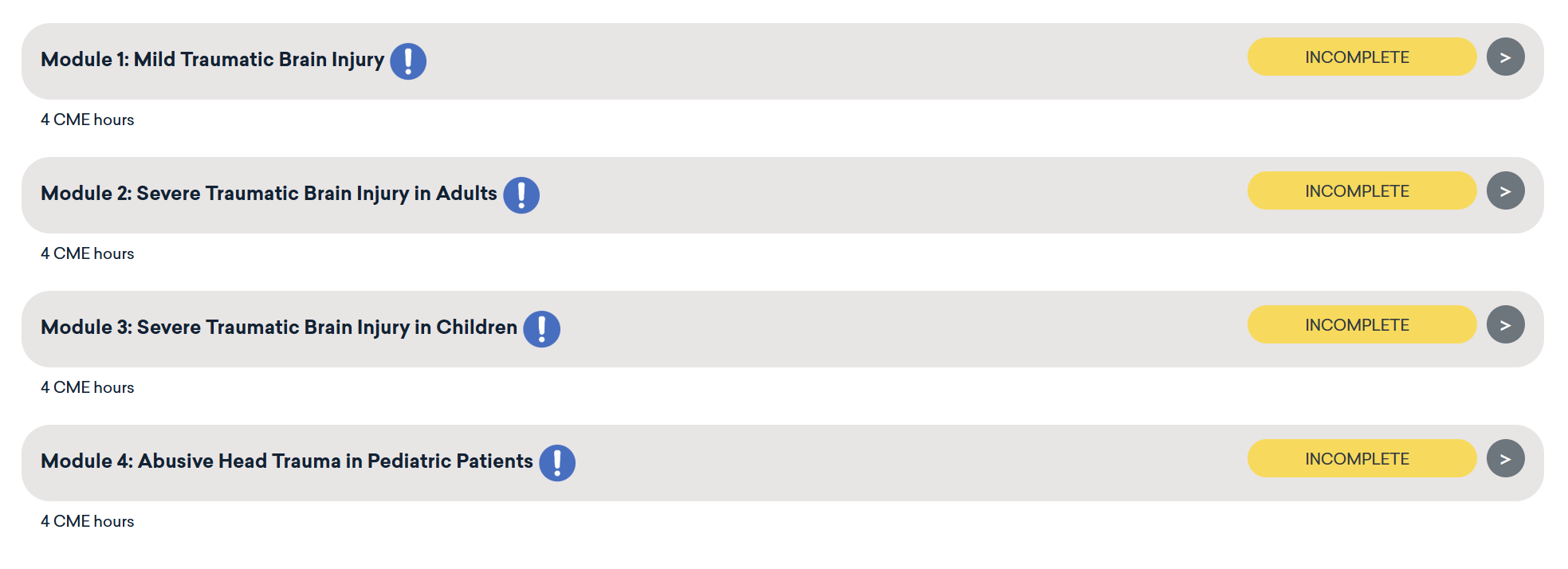
Trauma Essentials: Head Trauma course modules and progress preview

Quick reference resources

Revisit the pathways. Review the pitfalls. Put the takeaways into practice.

01

Interactive clinical pathways

Explore an interactive version of each module’s clinical pathway.

02

Risk Checks

Alerts placed throughout each module flag potential risk management pitfalls.

03

5 Things That Will Change Your Practice

Review five practice-changing takeaways from each module.

04

Points & Pearls

Download a printable, single-page, quick-read summary for each module.

05

Tables & Figures

Access all of the module’s tables and figures in one printable PDF.

A trauma expert’s perspective

“From detecting occult abusive trauma in pediatric patients to aggressive resuscitation in severe adult TBI, head trauma demands nuanced, rapid-fire decision-making. Grounding that care in current, high-level evidence is the single most effective way to improve functional neurological outcomes.”

Kaushal Shah, MD, FACEPEmergency Medicine Practice’s Trauma EXTRA Editor-in-Chief

Build your head trauma expertise

Strengthen your command of head trauma care—from mild injury to critical resuscitation.

Review mild TBI, severe injury in adults and children, and pediatric abusive head trauma in one online course—with case-based learning, interactive pathways, and printable references in every module.

*Trauma credits are subject to state and institutional approval.

Accredited Continuing Medical Education

CME and Accreditation

Each module carries 4 CME credits, all of which are Trauma credits.

16AMA PRA Category 1 Credits™
16AOA Category 2-B credit hours

Everything You Need to Know

Questions Before Enrolling?

Find quick answers about course content, included resources, CME, and group enrollment.

Does the course cover both adults and children?

Yes. Dedicated modules cover severe traumatic brain injury in adults, severe traumatic brain injury in children, and pediatric abusive head trauma. The mild TBI module addresses infants and young children as well as older adults taking anticoagulant or antiplatelet agents.

How does the case-based format work?

Choose a patient presentation at the beginning of a module and follow that case through the content. Complete a clinical check, then complete a three-question final case challenge accompanied by the case conclusion. You can return to the beginning and choose another case.

What resources are included in each module?

Risk Checks, 5 Things That Will Change Your Practice, an interactive clinical pathway, a printable single-page Points & Pearls summary, and a printable PDF containing the module’s tables and figures.

Can I earn Trauma CME credit?

Each module carries 4 CME credits, all of which are Trauma credits, for a course total of 16 CME credits and 16 Trauma credits. Trauma credits are subject to state and institutional approval. CME terminates February 15, 2028.

Is this an online-only course?

Yes. Trauma Essentials: Head Trauma is an online-only course, with lifetime access so you can return to the lessons and resources for a refresher. CME credit is available through February 15, 2028.

Build expertise for your next head trauma encounter

Manage head trauma with greater confidence—across ages and injury severity.

4 online modules · 10 patient cases · 16 Trauma CME credits*

Trauma Essentials: Head Trauma

Price: $349.00

Money-back guarantee


Editorial mockup


Enrollment is a placeholder in this review file. Price and the purchase destination will be added before publication.