Advanced practice clinicians bring valuable skills to emergency care teams, but their prior exposure to emergency medicine can vary widely. That variability can make onboarding challenging, especially in a specialty that requires rapid decision-making, broad clinical knowledge, and strong team-based practice.
The opportunity is to provide a more structured path to EM-specific clinical readiness, one that supports physician-led team practice, strengthens onboarding, and helps clinicians build the judgment and confidence needed in the ED.
Emergency Medicine Upskill Academy was built for that purpose: a comprehensive clinical education program designed to support advanced practice clinicians’ development in emergency medicine and help care teams deliver safer, more consistent, and more efficient care.
Full access to all Emergency Medicine Upskill Academy courses—over $2,500 in value, yours in one all-access package.
ESSENTIAL STUDIES
The Essential Studies onboarding curriculum equips emergency medicine clinicians with evidence-based knowledge and practical tools to confidently manage the most common complaints and high-risk scenarios encountered in the ED. Drawing from EB Medicine's trusted Emergency Medicine Practice journal, this comprehensive program combines digital content, clinical pathways, self-study resources, and interactive assessments to enhance clinical mastery and deliver superior patient care.
MUST-HAVE SKILLS
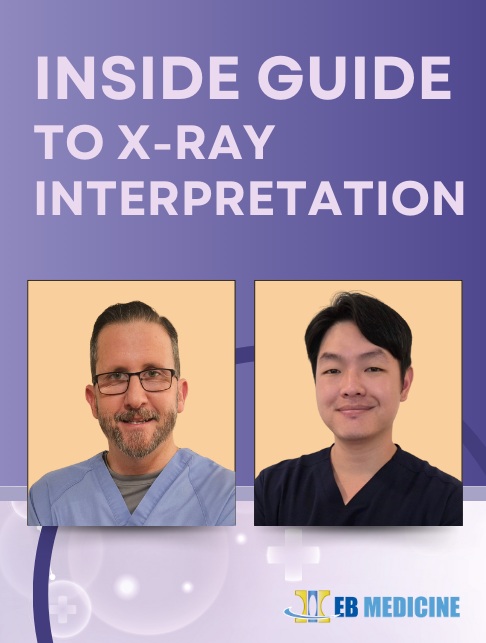
Inside Guide to X-Ray Interpretation: A Systematic Approach for Reading Radiographs gives clinicians a clear, practical framework for interpreting plain films with confidence. This course teaches a step-by-step, A-to-Z approach to reading radiographs, helping clinicians distinguish normal findings from high-risk pathology while avoiding common diagnostic pitfalls. Through expert-led instruction, real-world case examples, and proven mnemonics, they’ll build the skills to make faster, more accurate clinical decisions—even without immediate radiology support.
"After reviewing principles of chest X-ray interpretation, I will consistently assess inspiration, rotation, and projection (PA vs. AP) before interpreting findings to avoid misdiagnosis. I will ensure that imaging interpretation is integrated with clinical context and escalate care when emergency findings (e.g., open fractures, compartment syndrome) are suspected."
— Darshikkumar Patel, NP

MUST-HAVE SKILLS
The Laceration Course is a 12-module online video course covering the anatomy, physiology, pharmacology, and mechanics of lacerations—from simple to complex wound care and repairs—with step-by-step guidance, demos, and practical tips to make the lessons stick.
Also included are a downloadable and printable workbook, 27 case studies, cadaver videos, audio-only versions of every module, and a FREE Suture Practice Kit with silicone pad, instruments, and suture material.
"Working in a busy emergency department, I don't have the time to do as many laceration repairs as I would like. This course was a great review of key principles to remember in laceration repair. I particularly liked the videos demonstrating different techniques that can help with complicated laceration repairs."
— Kathrine O'Reilly, MD
MUST-HAVE SKILLS
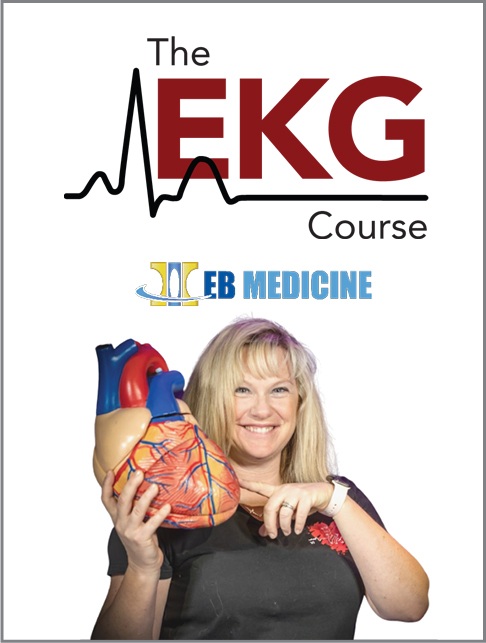
The EKG Course is an in-depth training program focused on EKG interpretation essentials and best practices, building on the basics to cover "next-level" principles and practices needed to succeed in acute care.
The course gives clinicians practical, hands-on, time-tested techniques for enhancing clinical skills, improving accuracy of EKG interpretation, and boosting confidence. They'll walk through real case scenarios involving chest pain, syncope, dyspnea, and other high-risk presentations—learning to recognize life-threatening patterns, avoid common mistakes, and make sound decisions about treatment or discharge.
"I really enjoyed and appreciate attending this excellent course, and hope that in the future we could have more of this type of training. Excellent presentation by Jennifer Carlquist."
— Richard Roman Camps Moreno, MD
MUST-HAVE SKILLS
The Abscess Course prepares acute care clinicians to diagnose and treat all kinds of abscesses, from chalazions to paronychia, anywhere on the body, from head to toe. Six modules and multitudes of close-up, step-by-step videos cover the basics of anesthesia and pain management, incision and drainage, procedures by body system, controversies, novel techniques, risk management tips, and more.
Through step-by-step instruction, high-quality footage from actual procedures, and guided case analysis, clinicians will learn how to make clean decisions and cleaner incisions—without second-guessing.
"The course was very good—a thorough review of the needed information in a modular format that allowed for learning in smaller increments of time. Good tips and pearls that I wish I had known for many years."
— Marc Mannenbach, MD
PRESCRIBING & MEDICATION STEWARDSHIP
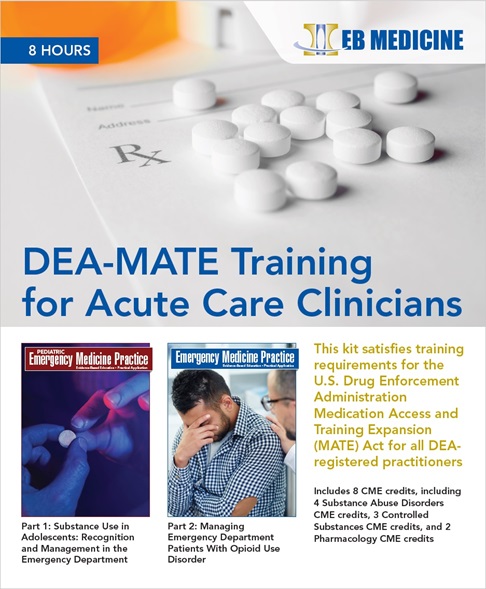
Meet DEA requirements with practical, acute care–focused training on opioid use and substance use disorders. Learn to manage intoxication, withdrawal, and medication-assisted treatment—including buprenorphine initiation—across both adult and pediatric populations.
"I appreciate the information provided. A very good overview of narcotic-related evaluation, considerations, and treatments."
— David Maver, NP
PRESCRIBING & MEDICATION STEWARDSHIP
This short-format deep dive into antibiotic stewardship is a training every acute care clinician needs. This isn't just another medical education video—it's your roadmap to making confident, evidence-based prescribing decisions that protect both your patients and public health.
Antibiotic Stewardship in Acute Care Practice breaks down complex stewardship principles into actionable strategies you'll actually use, backed by the research and tailored specifically for the fast-paced acute care environment.
"This antibiotic stewardship course is a strong, practical review of the most common areas of inappropriate antibiotic prescribing. It clearly reinforces the key diagnostic principles providers need when distinguishing bacterial from viral infections, and it offers helpful treatment guidance for cases where antibiotics are truly indicated. The course is a useful resource for teams looking to strengthen prescribing consistency and support evidence-based care."
— Michael H, MD
PRESCRIBING & MEDICATION STEWARDSHIP
Since when did practicing medicine become a tug-of-war between doing what’s right based on evidence and caving to patient demands? While it should be enough to explain that systemic steroids (oral and injectable) are often ineffective for many conditions and carry significant risks, patients are increasingly convinced that steroids offer a quick fix.
This educational webinar is ideal for clinicians who want to make informed, evidence-based decisions about steroid use, improve patient safety, and optimize clinical outcomes.
"This steroid stewardship course does an excellent job reinforcing the real-world risks of steroid prescribing. The content aligned closely with our internal provider guidance, but added specific adverse-event data that I hadn’t come across in my own research, including markedly increased short-term risks for CHF and DVT. The course also does a strong job showing how cumulative lifetime steroid exposure affects patient risk, using actual dosage data that helps make the issue concrete for clinicians. It’s a valuable resource for helping providers think more carefully about steroid risk assessment, patient counseling, and documentation."
— Michael H, MD
Call or text our group accounts team at 770-262-0339, or email groups@ebmedicine.net.
.png)
Accreditation:
EB Medicine is accredited by the Accreditation Council for Continuing Medical Education (ACCME) to provide continuing medical education for physicians.
Accredited By


Our Partners







 678-366-7933


 Store
Store